



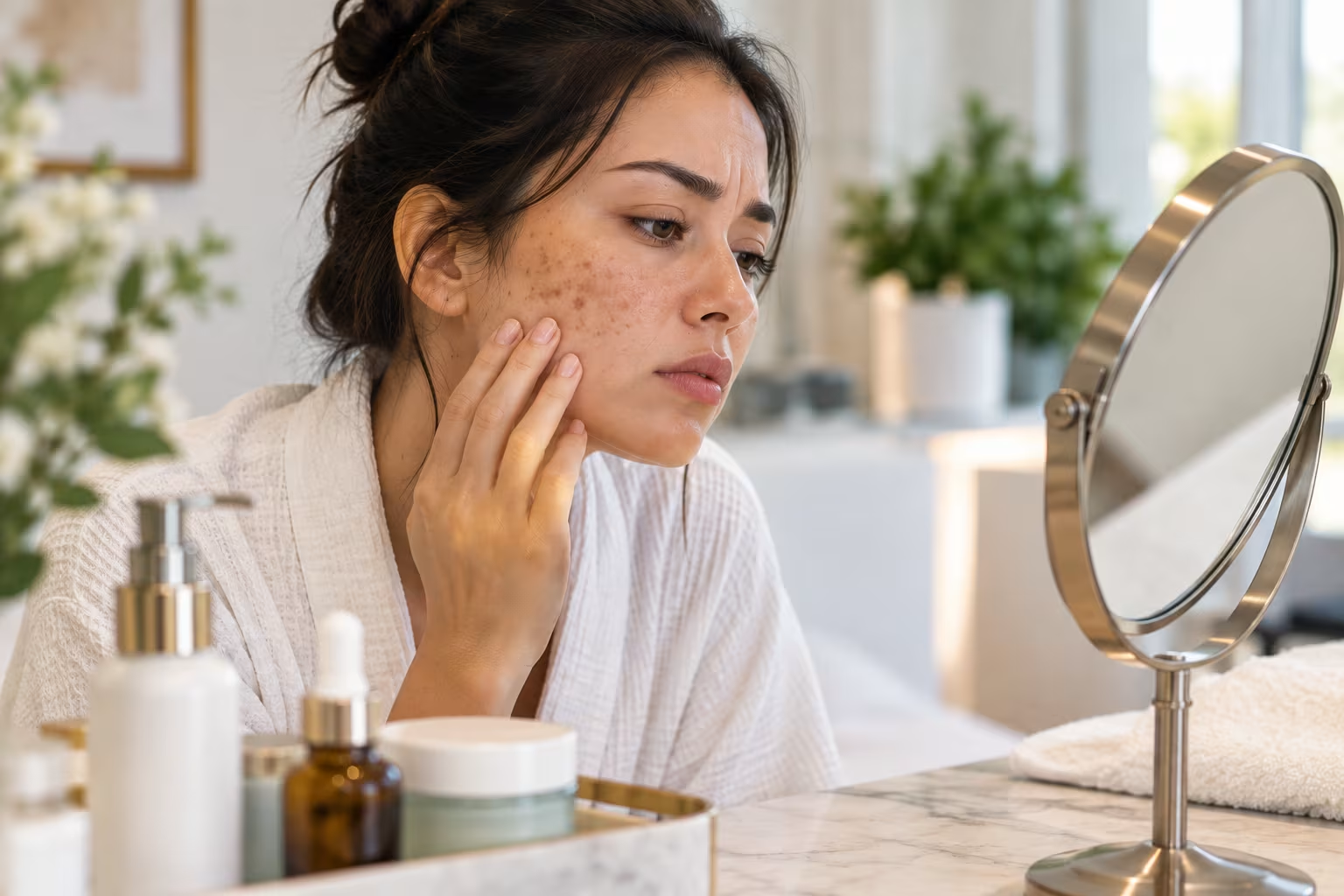
You've tried brightening serums, religiously worn sunscreen, and maybe even skipped the beach for a summer, yet those stubborn dark patches on your cheeks or along your jawline just won't budge. If this sounds familiar, you're dealing with a form of hyperpigmentation that's often too deep or too stubborn for over-the-counter products to fully resolve, which is exactly why a depigmentation peel has become one of the most searched solutions for people in this exact situation.
Let's break down what's actually causing those spots, why some fade easily while others don't, and what a professional depigmentation approach can realistically do about it.
What Causes Dark Spots and Uneven Skin Tone?
Hyperpigmentation happens when certain areas of skin produce excess melanin, the pigment responsible for skin color. This overproduction can be triggered by a number of factors, and understanding which one applies to you matters because it affects how stubborn the pigmentation will be.
Is Sun Exposure the Main Cause of Dark Spots?
Sun exposure is one of the biggest contributors, since UV rays stimulate melanin production as a protective response. Over years, this can create sunspots, also called solar lentigines, particularly on areas that get consistent sun like the cheeks, forehead, and hands.
What Is Melasma, and Why Is It So Hard to Treat?
Melasma is a specific type of hyperpigmentation driven largely by hormonal fluctuations, often appearing during pregnancy, with birth control use, or alongside certain hormonal changes. It typically shows up as larger, symmetrical patches, often across the cheeks, forehead, or upper lip, and it tends to be more resistant to standard brightening products because hormonal pigmentation sits deeper in the skin.
Can Acne Cause Dark Spots Too?
Yes, this is called post-inflammatory hyperpigmentation, and it happens when inflammation from a breakout triggers excess melanin in that specific spot as the skin heals. This is common enough that a lot of our Acne Bootcamp clients ask about pigmentation treatment once their active breakouts are under control.
Why Do Some Dark Spots Fade While Others Seem Permanent?
Pigmentation that sits closer to the skin's surface tends to respond faster to treatment, while pigmentation that has settled into deeper layers takes longer and often requires a more targeted approach than daily skincare alone can provide.
What Is a Depigmentation Peel?
A depigmentation peel is a professional treatment designed specifically to target excess melanin at a deeper level than typical exfoliating products can reach. Rather than simply peeling the surface, these treatments work to interrupt the pigment-production process itself, which is why they tend to be more effective for stubborn pigmentation like melasma and long-standing sunspots.
At our Costa Mesa studio, our Cosmelan Peel is our most requested option for clients dealing with melasma, sunspots, and post-acne marks that haven't responded to other approaches. It's designed as part of a broader depigmentation protocol, meaning the in-studio treatment is paired with a specific at-home care plan to maximize and maintain results.
How Is a Depigmentation Peel Different From a Regular Chemical Peel?
This is a common point of confusion. A standard chemical peel, like our VI Peel or BioRePeel, generally works through broad exfoliation, improving texture, tone, and overall radiance. A depigmentation peel is more specialized, formulated specifically to target melanin production and break the cycle that keeps dark spots forming in the first place.
Some clients benefit from starting with a depigmentation-focused approach for stubborn spots and later incorporating a general chemical peel for ongoing maintenance and glow.
Who Is a Good Candidate for a Depigmentation Peel?
This treatment tends to work well for people dealing with melasma that hasn't responded to topical brightening products, sunspots or age spots that have developed over years of sun exposure, or lingering dark marks left behind after acne has cleared. It's less suited for very sensitive or actively inflamed skin, which is why a proper evaluation matters before starting.
What Should You Expect During and After Treatment?
During treatment, a specialized formula is applied to the skin to begin the depigmentation process. Some warmth or mild tingling is normal. In the days that follow, visible peeling is common as the treated layer sheds, revealing fresher skin underneath. This part of the process can look more dramatic than other treatments, so planning your peel around a period when you can stay out of the spotlight for a few days is worth considering.
Strict sun protection afterward is non-negotiable, since freshly treated skin is highly sensitive to UV exposure, and unprotected sun exposure during recovery can actually trigger the pigmentation to return.
How Long Does It Take to See Results From a Depigmentation Peel?
Visible peeling typically begins within a few days and continues for about a week. Underneath that surface change, pigment reduction becomes more noticeable over the following several weeks as new, more even-toned skin comes through. Because melasma in particular can be influenced by ongoing hormonal factors, maintenance treatments and a consistent at-home routine are often part of keeping results long-term.
Is a Consultation Necessary Before Booking a Depigmentation Peel?
Given how different the causes of hyperpigmentation can be, from hormones to sun damage to post-acne marks, a professional skin care consultation is genuinely important here. Treating melasma the same way you'd treat a simple sunspot can sometimes make hormonal pigmentation worse, so getting an accurate read on what you're dealing with matters more than jumping straight to treatment.
Depigmentation Peels Near Costa Mesa and Newport Beach
We work with clients throughout Costa Mesa and Newport Beach who have spent years trying to fade dark spots and melasma with limited results. If daily brightening products haven't been enough, a professionally guided depigmentation peel may be the missing piece your routine has been waiting for.
Frequently Asked Questions
What is chemical peel treatment, and is a depigmentation peel the same thing? A chemical peel is a broader category of exfoliating treatment, while a depigmentation peel is a specialized version formulated specifically to target melanin and pigmentation rather than general texture and tone.
Does a depigmentation peel hurt? Most clients feel mild warmth or tingling during application rather than significant pain, though sensitivity can vary depending on skin type.
How long does peeling last after treatment? Visible peeling typically lasts about a week, with continued improvement in tone visible over the following weeks.
Can a depigmentation peel treat melasma completely? It can significantly reduce the appearance of melasma, but because melasma is often hormonally driven, ongoing maintenance and sun protection are usually needed to keep it from returning.
Is a depigmentation peel safe for all skin tones? Suitability depends on individual skin type and pigmentation history, which is why a consultation before treatment is strongly recommended.
This guide was updated in August 2026 to reflect current depigmentation treatment approaches for clients in Costa Mesa and Newport Beach.
Consider This Your Spot Check
Dark spots might feel permanent, but in most cases they're simply a pigment production problem waiting for the right intervention. With an accurate diagnosis and a treatment built to match what's actually causing your pigmentation, more even, brighter skin is a realistic goal rather than a distant hope.
Book your depigmentation peel consultation today and start treating those spots at the source.