



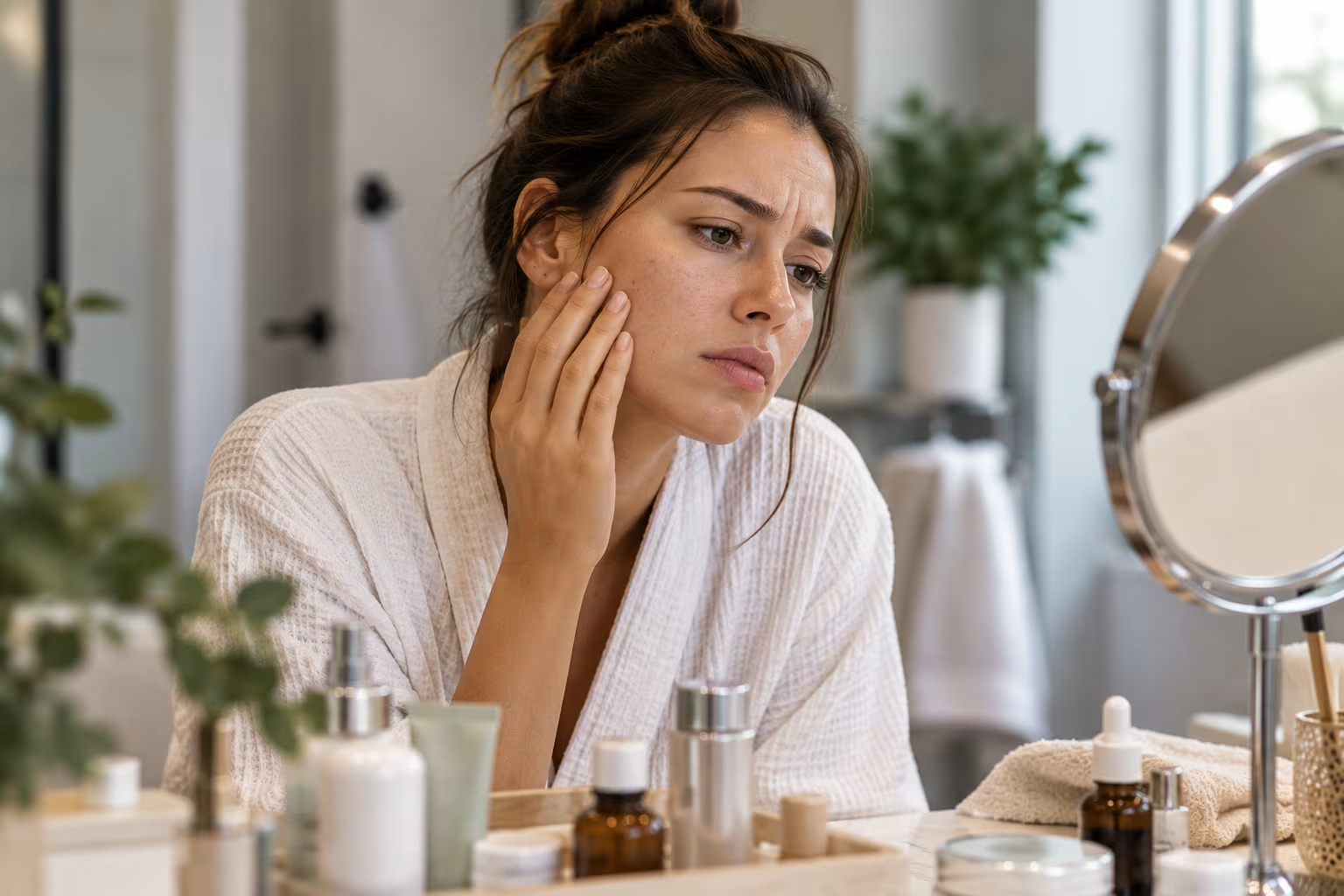
You have cleaned up your routine. You are using a gentle cleanser, a retinol a few nights a week, sunscreen every single morning, and yet the same issues keep staring back at you in the mirror. Maybe it is the shallow pitting left behind from acne you had years ago. Maybe it is a general roughness that makeup seems to sit on instead of blending into. Or maybe your skin just looks tired, uneven, and older than you feel.
If that sounds familiar, you are not alone, and you are not doing anything wrong. Topical products can only reach the surface layer of the skin. The kind of change you are looking for, smoother texture, tighter pores, faded scarring, a more even tone, happens underneath the surface, in the deeper layers where collagen and elastin are produced. That is exactly where microchanneling comes in, and it is one of the most requested treatments at Shorrbeauty in Costa Mesa for exactly this reason.
This article breaks down what causes stubborn texture and scarring in the first place, why at-home products often fall short, and how microchanneling works to actually rebuild the skin rather than just polish it.
What Causes Uneven Skin Texture and Scarring?
Before jumping into treatment, it helps to understand what is actually happening beneath the surface.
Is It Acne Scarring or Just Textured Skin?
Acne scarring happens when inflammation from a breakout damages the collagen structure supporting the skin. As the wound heals, the body does not always rebuild that collagen evenly, which can leave behind shallow depressions, rolling texture, or raised marks. Even people who no longer break out regularly can be left with this kind of textural damage for years afterward.
Why Does Skin Get Rougher and Less Even With Age?
Collagen production naturally slows down starting in your mid twenties, and it continues to decline every year after that. Combined with years of sun exposure, environmental stress, and normal cell turnover slowing down, skin gradually loses the smooth, even quality it once had. This shows up as enlarged pores, fine lines, and a texture that feels less refined to the touch.
Can Hyperpigmentation and Rosacea Affect Texture Too?
Yes. Conditions like hyperpigmentation and rosacea are not just about color, they are also tied to inflammation and how the skin heals itself. Chronic redness and pigment irregularities often go hand in hand with a compromised skin barrier, which is part of why so many people dealing with these concerns also notice rougher, less resilient skin overall.
Why Don't Serums and Creams Fix It?
This is one of the most common questions people bring to their first consultation. Topical products are formulated to work on the outermost layer of skin, the stratum corneum. They can hydrate, exfoliate, and support the barrier, but they cannot physically reach the dermis, the deeper layer where collagen and elastin actually live.
To meaningfully rebuild collagen and repair texture, the skin needs to be encouraged to heal itself from within. That requires a controlled, professional approach, which is where collagen induction therapy becomes so valuable.
What Is Microchanneling and How Does It Work?
Microchanneling, also known as microneedling, is a minimally invasive treatment that creates precise, controlled microchannels in the skin using a device with fine needles. These microchannels are far too small to see with the naked eye, but they are enough to trigger the body's natural wound healing response, prompting it to produce fresh collagen and elastin.
At Shorrbeauty, the Microchanneling MD treatment goes a step further. During the session, potent peptides, growth factors, and regenerative molecules are delivered directly through the newly created microchannels, allowing them to reach deeper into the skin than a topical application ever could. The treatment concludes with red light therapy, which helps calm inflammation and accelerate the healing process.
What Skin Concerns Does Microchanneling Actually Improve?
Based on how the treatment works, it is particularly effective for:
- Acne scars and uneven texture
- Fine lines and early signs of aging
- Hyperpigmentation and dark spots
- Rosacea-prone or reactive skin
- Loss of firmness and elasticity
- Enlarged pores
Does Microchanneling Hurt?
Most clients describe the sensation as mild pressure or a light scratching feeling rather than sharp pain. A topical numbing agent is typically used beforehand to keep the treatment comfortable. Some redness similar to a mild sunburn is common immediately afterward, but it usually fades within a day or two.
What Should I Expect During Recovery?
Downtime is minimal compared to more aggressive resurfacing treatments. Skin may appear slightly flushed for 24 to 48 hours, and gentle skincare is recommended in the days following treatment. Results are not instant. Because the treatment works by stimulating your own collagen production, visible improvement builds gradually over the following weeks as new collagen forms.
Who Is a Good Candidate for Microchanneling?
Microchanneling tends to work well for most skin types and tones, which is part of why it has become so popular. It is especially well suited for anyone dealing with acne scarring, textural irregularities, early aging, or skin that reacts poorly to more aggressive treatments. A consultation is the best way to confirm it is the right fit for your specific skin, especially if you have active breakouts, certain skin conditions, or are currently using prescription retinoids.
How Many Sessions Will I Need?
Because collagen remodeling is a gradual biological process, a single session will not produce the same results as a series. Most clients see the best, most lasting improvement in texture, tone, and firmness when microchanneling is done as part of a series, spaced a few weeks apart, with results continuing to build over time. During a consultation, Tara can map out a treatment plan based on your skin's specific needs, whether that is scarring, early aging, or a combination of concerns.
Is Microchanneling Better Than At-Home Rollers?
At-home microneedling rollers and pens are generally far shorter and cannot deliver growth factors and peptides as effectively or as safely as a professional device used by a trained provider. There is also a meaningfully higher risk of improper technique, uneven pressure, or infection when performed without medical-grade tools and sanitation. For real, measurable change in scarring or texture, a professional treatment performed in a clinical setting is going to outperform an at-home tool every time.
Bringing It All Together in Costa Mesa
If you are based in Costa Mesa or nearby in Newport Beach and have been trying to smooth out your skin's texture without much success, it may simply be that your routine has hit its ceiling. Topical products can only do so much on their own. Microchanneling gives your skin the tools and the trigger it needs to rebuild collagen from the inside out, addressing scarring, tone, and texture at the source rather than temporarily masking it.
Shorrbeauty's Microchanneling MD treatment is performed by licensed Medical Aesthetician Tara Shor, who tailors every session to the individual skin in front of her rather than applying a one-size-fits-all protocol. If acne scarring, rough texture, or early signs of aging have been bothering you, a conversation about your skin is a good place to start.
Frequently Asked Questions
How long do microchanneling results last? Results build gradually and can last several months to over a year depending on your skin and how well you maintain it with sun protection and a supportive skincare routine. Many clients return for periodic maintenance sessions to sustain their results.
Is microchanneling the same as microneedling? Yes, microchanneling and microneedling refer to the same category of treatment. Microchanneling is often used to describe more advanced, medical-grade versions of the treatment that include additional steps like growth factor infusion and red light therapy.
Can microchanneling help with rosacea? Many clients with rosacea-prone skin see improvement in redness and resilience, since the treatment supports a healthier skin barrier. A consultation is important beforehand to confirm the timing is right based on how active your rosacea is.
How much does microchanneling cost in Costa Mesa? Pricing depends on the treatment area and any add-ons selected. You can find current details and book directly through the Microchanneling MD page or by contacting Shorrbeauty directly.
Will I need to change my skincare routine before treatment? In most cases, a short pause on retinoids or active exfoliants is recommended in the days leading up to your appointment. Your provider will walk you through exactly what to do and avoid during your consultation.
This article was updated this September 2026 to reflect the most current information on microchanneling treatments in Costa Mesa, California.
Ready to see what your skin can actually do? Book your Microchanneling MD session at Shorrbeauty in Costa Mesa, or start with a personalized skin consultation to build a plan around your specific concerns.